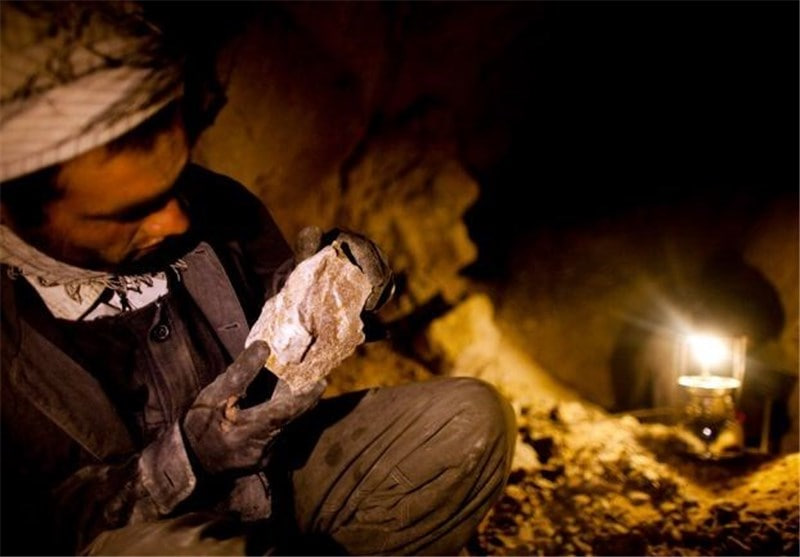
According to IRAF, reliable sources say that the “Chehelkan” mine in the Shahre Bozorg district of Badakhshan is one of the largest gold mines in the province, and that Taliban parties affiliated with Kandahar, the Haqqani network, and Taliban of Tajik origin have long been in disputes over its extraction.
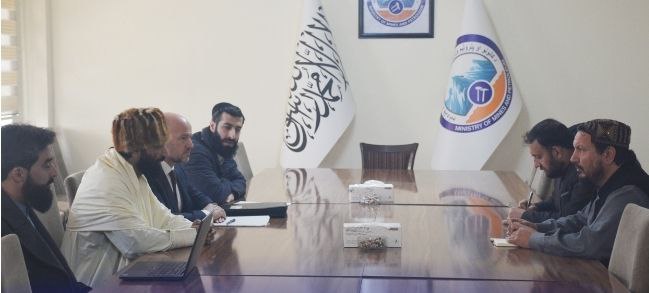
Mohammad Esma’eel Ghaznavi, the newly appointed Taliban governor of Badakhshan, acting on the direct orders of Taliban leader Mullah Hibatollah Akhundzadah and Hedayatollah Badri, the minister of mines’ administration, has signed most gold mining contracts with Chinese companies, effectively preventing other provincial officials from entering into similar agreements with foreign entities.
The source adds that the significant presence of Chinese in the provinces of Badakhshan and Takhar has increased public concern, as local communities are increasingly marginalized and Chinese companies reportedly do not employ local residents.
It is also reported that Chinese workers and engineers are present in large numbers across Afghanistan, particularly in the northern provinces, and have at times engaged in coercive behavior toward local residents.
IRAF sources, citing local residents, say that the Kandahari Taliban’s efforts to seize and extract mineral resources are such that they appear to have come solely to loot and plunder, with coercion, killings, and the unregulated extraction of mines and are among the group’s main methods.
Haqqani Network Operatives in Search of Gold
Meanwhile, Qari Moawiya, a close associate of Sirajuddin Haqqani in the Shahre Bozorg district of Badakhshan, is reportedly seeking to identify gold-bearing lands and promptly inform senior figures within the Haqqani network.
A source from the Badakhshan Department of Mines told IRAF that tensions sometimes arise among Pashtun leaders over mining operations. While the source said they could not determine which of the rival individuals were affiliated with Kandahar and which with the Haqqani network, they noted that Kandaharis and Helmandis have historically remained allied and have had frictions with Pashtuns from other provinces—indicating that the core dispute is between the Haqqani network and the Kandahar party.
The Footprint of Haji Bashir Noorzai
A gold mine owner told IRAF that Haji Bashir Noorzai—a major drug trafficker and one of the Taliban’s principal financial backers, who was sentenced in the United States to two life terms and is said to enjoy the direct support of the Taliban leader—is operating against Taliban elements affiliated with the Haqqani network and competing with them over mine extraction.
At least two local sources from among the tribal elders of Shahre Bozorg told IRAF that Haji Bashir Noorzai has also deceived Tajiks, keeping one of his direct partners, Faisal Khorasani, a Tajik businessman, occupied with the sport of buzkashi while he himself engages in the looting and plundering of mines.
Sources further say that Haji Bashir Noorzai is directly involved in the Bikadur gold mines in Raghistan district, the lapis lazuli mine in Karan and Manjan, the beryl mine in Jurm district, the ruby mine in Khash district, and the Doabe gold mine in Yeftal- Bala district of Badakhshan. They add that landowners and mine operators are compelled to enter into contracts with him.
The Role of Taliban Intelligence in the Extraction of Badakhshan’s Mines
A local source says that a man named Hafiz Abdulhadi, a close associate of the head of Badakhshan’s intelligence and a trusted aide of the Taliban’s Minister of Mines, commands nearly 50 armed, unaccountable men. Hafiz Abdulhadi hails from Sangin district in Helmand province.
According to the source, Hafiz Abdulhadi has consistently been in conflict with the Haqqani network as well as with individuals loyal to Fasihuddin Fetrat, chief of the Taliban army staff, and follows no law or principle in mine extraction.
A local source told IRAF that Hafiz Abdulhadi, along with his guards, has seized areas controlled by officials and residents of Badakhshan. Two months ago, he allegedly killed two followers of Qari Fasihuddin Fetrat in Yawan district and injured several others.
The source added that lands known locally as “Zarkharid” or inherited over generations from residents’ ancestors are being forcibly seized by Hafiz Abdulhadi, and no one is able to resist him.
According to the source, when tensions over land ownership escalated, a delegation from Kabul went to Badakhshan and ruled in favor of the local Taliban, but Hafiz Abdulhadi still refused to comply and seized the land under the orders of Hedayatullah Badri.
Extensive Presence of Chinese Nationals
As noted above, sources told IRAF that Chinese nationals are heavily involved in the extraction of minerals in Afghanistan, particularly in northern provinces, including Panjshir and Takhar.
Local witnesses report that anyone traveling from Kabul to the north is almost certain to encounter Chinese workers heading in the same direction.
The Chinese mostly partner with Kandahari and Helmandi Pashtuns, Qari Fasihuddin Fetrat, chief of the Taliban army staff, and Maulvi Ayub Khalid, former governor of Badakhshan, and operate under their direct protection in mining activities.
Notably, in all mines controlled by Pashtuns, no local Badakhshani is employed even as a worker, which has repeatedly triggered protests by local residents—protests that have been harshly suppressed.
Faisal Khorasani, together with Maulvi Saifuddin Taeb, deputy of the Taliban’s administrative affairs office, has forcibly seized hundreds of jeribs of land in this district and is extracting minerals from it.
Taliban of Tajik origin
Apart from Fasihuddin Fetrat, a few local traders control several mines; however, compared to Pashtuns, less than 5 percent of Badakhshan’s mines are under their ownership.
Although there have been reports of extortion by individuals loyal to Fasihuddin and Amanuddin Mansour targeting mine operators, our sources explicitly denied such claims.
In this way, the extraction of minerals in Badakhshan and other northern provinces of Afghanistan is proceeding rapidly, with gold and other valuable items being mined and looted.