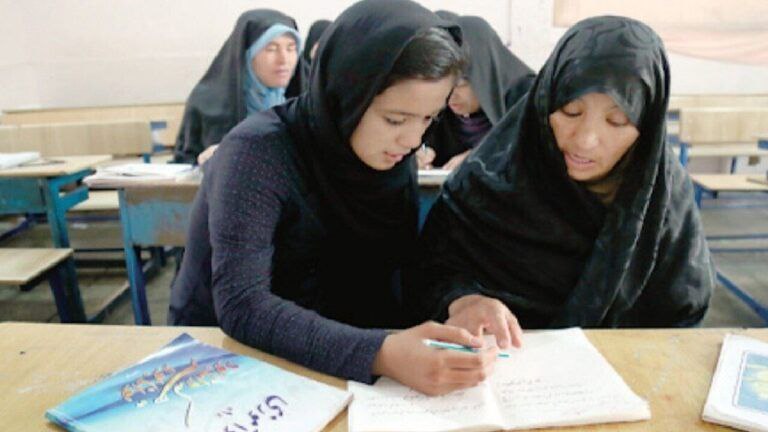
According to Iraf News Agency, the seventh day of the month of Dey in Iran is named; Literacy Movement Day and is registered in the Iranian calendar.
Iran’s Literacy Movement Organization is an Iranian governmental organization established on the 7th of Dey, 1358 (December 28, 1979), by the decree of Imam Khomeini . Its purpose is to teach reading and writing to adults as well as children who lack access to schooling (in deprived areas). It has since carried out extensive literacy activities, including providing literacy services to foreign nationals, especially Afghans.
Nader Yarahmadi, the Head of the Center for Foreign Nationals and Immigrants Affairs at the Ministry of Interior, announced last month that, as of the 1404 academic year, 320,000 emigrant students have enrolled in schools.
920,000 Foreign Nationals Covered by Literacy Programs Over 45 Years
According to the 2016 Census, approximately 400,000 foreign nationals aged 10 to 49 in the country were illiterate. Given the high rates of immigration in certain areas, especially Tehran and the border provinces, this group constitutes a significant portion of the illiterate population.
Abdolreza Fouladvand, the Head of the Literacy Movement Organization, announced that Iran has placed about 920,000 Afghan and Iraqi nationals under its literacy program coverage over the past 45 years. International aid in this sector has been very limited or even without any aid.
Moreover, approximately 18,000 to 22,000 foreign nationals receive education annually, 94% of whom are Afghan. In the year 2024-2025, the progress rate for the emigrant literacy course was reported at 65.01% and for the transition course at 54.64%.
The literacy rate among Afghan nationals upon entering Iran was about 6%; however, based on the 2016 census, this rate reached 60%, which is higher than the average literacy rate in Afghanistan (approximately 50%).
Access to Education for Foreign Nationals in Adult Schools and Literacy Movements
Access to education for foreign nationals and refugees plays a significant role in both individual and social empowerment. Adult schools and the Literacy Movement organization are pathways through which many foreign adults can acquire basic literacy and equivalent educational credentials.
According to the regulations of the Ministry of Education, eligible foreign nationals can register for literacy courses and adult schools. Registration requirements vary depending on residency status (those with residence documents, asylum seekers, or those without documentation).
In the absence of complete documentation, providing a letter of introduction from supportive institutions can be beneficial. Many educational centers offer facilities and accommodations for refugees and those who lack complete residency documents.
It is noteworthy that many programs offered by the Literacy Movement and adult schools are conducted free of charge or at a low cost. In cases where tuition fees apply, the possibility of receiving assistance from charitable organizations or support agencies is available.
Widespread Educational Deprivation in Afghanistan
Meanwhile, following the Taliban’s takeover of Afghanistan, approximately 2.2 million girls have been deprived of continuing their education in grades beyond primary school.
The United Nations Educational, Scientific and Cultural Organization (UNESCO) has warned that if the current restrictions persist, the number of girls deprived of education will reach more than 4 million by the year 2030.