According to IRAF, Tehran is today hosting a two-day meeting on Afghanistan with the participation of representatives from various regional countries, including China, Russia, and Pakistan. Mohammad Reza Bahrami, Assistant to the Foreign Minister and Director-General for South Asia at Iran’s Ministry of Foreign Affairs, stated yesterday, referring to the holding of this meeting:
“The Islamic Republic of Iran has always viewed stability, security, and sustainable development in the region as contingent upon the realization of these objectives in all regional countries, including Afghanistan; within this framework, it has pursued extensive consultations with neighboring states and influential parties.”
Emphasizing that the meeting is the outcome of consultations and exchanges of views between Iran and regional countries, Bahrami added that the main objective of the gathering is to create a platform for discussion and the presentation of views by the special representatives of Afghanistan’s neighboring states. He underlined that the meeting seeks to strengthen convergence and mutual understanding regarding relevant developments. Referring to Afghanistan’s potential for regional cooperation, the Director-General for South Asia noted that Afghanistan can play a significant role in regional connectivity, economic development, and the strengthening of regional security.
Tehran’s Effort to Localize Solutions to the Afghanistan Crisis
The holding of a two-day regional meeting on Afghanistan in Tehran can be regarded as a purposeful effort by the Islamic Republic of Iran to redefine the role of neighboring countries in managing the Afghan crisis. The presence of countries such as China, Russia, and Pakistan reflects a shared understanding among regional actors of the direct link between Afghanistan’s stability and regional security and development, as well as confidence in Tehran’s capacity to propose a regional formula for resolving the crisis—an approach which, according to Iranian officials, cannot succeed without the active participation of neighboring states.
From Iran’s perspective, this meeting goes beyond a purely diplomatic event and constitutes part of a long-term process aimed at fostering mutual understanding and regional convergence, within which Afghanistan should not be viewed solely through a security-oriented lens.
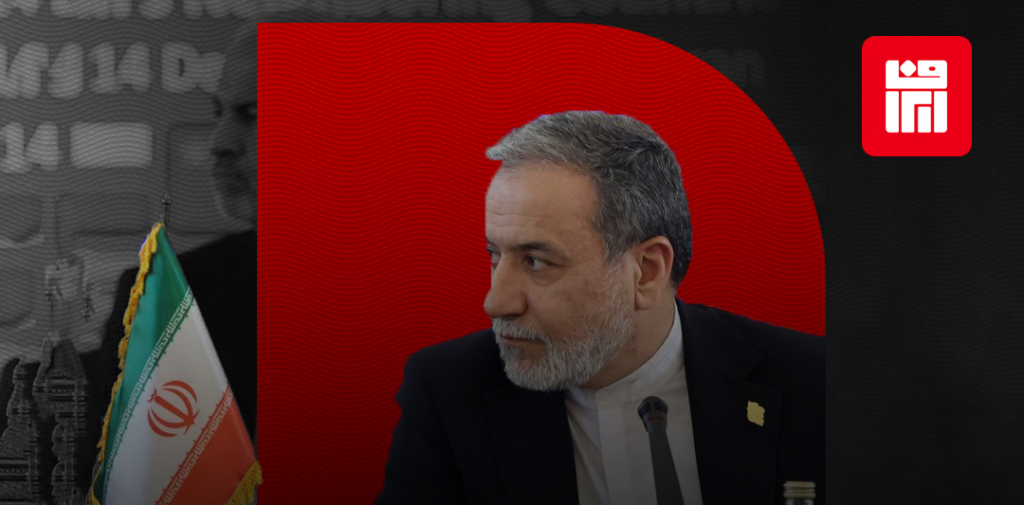
From a broader viewpoint, Tehran’s active diplomacy toward Afghanistan is rooted in decades of experience with crisis and failed external interventions. As Seyed Abbas Araghchi has emphasized, imposed and interventionist approaches have not only failed to resolve the Afghan crisis but have also compounded its complexity. Seen in this light, Iran’s emphasis on the central role of neighboring countries represents an effort to localize solutions and reduce dependency on extra-regional actors—an issue that historical experience has shown, if neglected, leads only to fragile peace, the استمرار of cycles of violence, and the intensification of proxy rivalries in Afghanistan.
Regional Mechanisms in the Post-Taliban Context
This meeting is taking place at a time when, following the Taliban’s return and the failed experience of U.S. involvement in Afghanistan, the region has sought to localize the management of Afghanistan’s crises and address them through regional mechanisms. This approach becomes particularly salient in light of decades of war in Afghanistan on the one hand, and the failure of extra-regional mechanisms to effectively manage Afghan affairs on the other—factors which underscore the growing necessity of a regional solution.
Accordingly, the meeting—attended by representatives of influential regional countries including China, Russia, and Pakistan—can be viewed as a rational effort to institutionalize region-centered approaches to Afghanistan. This is especially significant given the regional nature of developments in Afghanistan and the clearly felt absence of such an approach. This perspective is echoed in statements by Iranian Foreign Ministry officials, particularly Mohammad Reza Bahrami’s emphasis on the inseparable link between Afghanistan’s stability and regional security, reflecting Iran’s structural understanding of the interconnected nature of the Afghan crisis.
From this standpoint, Afghanistan is not merely a crisis-ridden political entity, but a geopolitical link within the region’s security, economic, and transit networks—one whose instability can produce spillover effects for its neighbors. Emphasis on Afghanistan’s potential for regional connectivity and economic development likewise indicates Tehran’s effort to move beyond purely security-based approaches toward a development-oriented reading of the Afghan issue.
The Regionalism Approach to the Afghanistan Crisis
The significance of this meeting is further accentuated by Afghanistan’s historical experience, which demonstrates that foreign interventions have produced little but failure. Imported solutions and imposed mechanisms have placed the resolution of the Afghan crisis on a convoluted and uncertain path. In this context, Seyed Abbas Araghchi’s emphasis on the central role of neighboring countries can be seen as an attempt to redefine the regional order surrounding Afghanistan—one in which regional actors, as direct stakeholders, assume greater responsibility for crisis management.
Iran’s role over recent decades, grounded in non-interventionism, facilitation, and a regionalist approach, has been aimed at steering Afghanistan away from unsuccessful trajectories. As a staunch critic of foreign interventionism, the Islamic Republic of Iran now hopes that through a regionalism-based approach—one requiring continuity and comprehensive effort—the Afghanistan crisis can be safely overcome.
This aspiration is articulated at a time when, in the absence of the Taliban from this meeting, a large number of Afghan political figures, parties, and movements have recently, within a framework known as “Ham-Sedāyi” (Convergence), called for the formation of fully national, intra-Afghan negotiations free from foreign interference. In such a process, neighbors, the region, and the international community would function solely as supporters and facilitators rather than interveners. Nevertheless, it must not be overlooked that historical experience shows any peace process in Afghanistan is ultimately bound to fail in the absence of one of the main parties to the conflict.