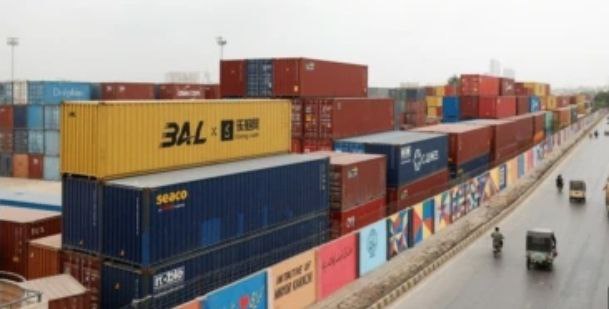
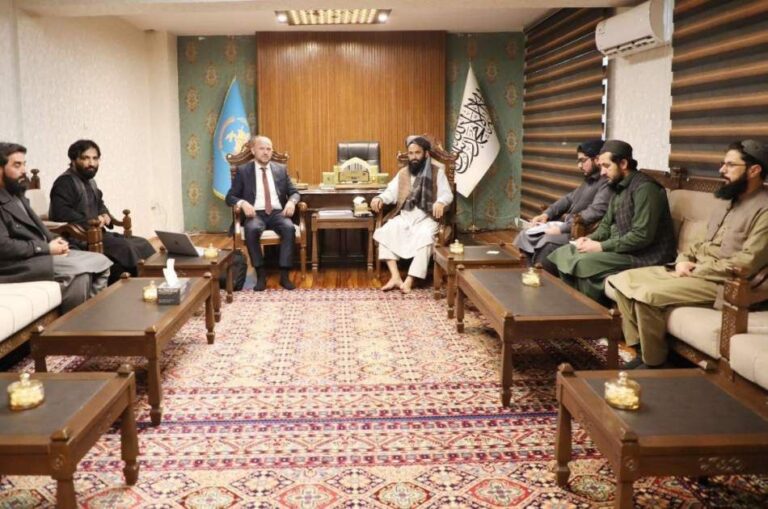
Tehran-IRAF- The city of Astana recently hosted an extraordinary session of the Regional Contact Group of Special Representatives of Central Asian countries on Afghanistan, attended by delegations from Kazakhstan, Kyrgyzstan, Tajikistan, and Uzbekistan. The agenda centered on trade and economic cooperation with Afghanistan, including joint projects, investment support, transit tariff policies, and the development of transportation corridors through Afghan territory.
The formation of this group reflects the practical implementation of agreements reached at the sixth Consultative Meeting of Central Asian Heads of State held in August 2024 in Astana, as outlined in the regional cooperation roadmap for 2025–2027. The first meeting of the Contact Group was held on August 26 last year in Tashkent.
The Astana meeting reaffirmed regional countries’ intention to deepen cooperation through a structured platform capable of coordinating actions and presenting them externally in a unified manner. While some external observers believe Central Asian states have only recently begun attempting to adopt a common position on Afghanistan, this stance has largely taken shape in recent years. The current task is not to formulate it, but to refine and coordinate it more precisely.
The Astana meeting demonstrated that for Central Asian countries, the primary concern is not the nature of Kabul’s government, but Afghanistan’s ability to function as a predictable economic partner and responsible participant in international relations.
For Central Asia, it is essential that its southern neighbor operate according to accepted economic standards, ensure reliable transit management, and integrate into regional cooperation frameworks. The goal is to anchor Afghanistan within a regional framework—not as a source of concern or threat, but as a full participant in discussions related to water resources, security, logistics, and environmental issues.
For Central Asian countries, Afghanistan is not an abstract issue of global politics, but an important neighbor. Their pragmatic policy toward Afghanistan effectively shapes a regional path initiated and coordinated by the Central Asian states themselves.
Relations Between Central Asian Countries and Afghanistan
Developments in Afghanistan under Taliban rule have become one of the most complex security and geopolitical equations for its northern neighbors—Central Asian states. Since the Taliban’s return to power, the region’s approach has shifted from initial caution and waiting to risk management and containment. The primary objective is no longer stabilizing Afghanistan, but minimizing the spillover of security, economic, and social threats into their own territories.
This approach is built around three main concerns:
First is Security risks and transnational terrorism. The most serious concern, particularly for Tajikistan—which shares the longest border with Afghanistan—is the infiltration of transnational terrorist groups, especially ISIS-Khorasan. Attacks against Chinese nationals in Tajikistan (November 2025) and in Kabul (January 2026) demonstrate these groups’ operational capabilities beyond Afghanistan’s borders. These threats have intensified security cooperation through the Russia-led Collective Security Treaty Organization (CSTO). Second is Border security and organized crime. Central Asian countries are significantly strengthening border infrastructure and anti-drone capabilities. Tajikistan, with support from the CSTO and Russia, is reinforcing its border defenses. Third is; Drug, weapons, and currency trafficking, which threaten domestic order and security.
Despite shared concerns, achieving a fully unified and coordinated position among the five Central Asian countries—Kazakhstan, Uzbekistan, Turkmenistan, Kyrgyzstan, and Tajikistan—faces serious structural obstacles:
- Economic competition: Two competing railway corridor projects aim to connect to South Asia through Afghanistan: the Kazakhstan–Turkmenistan–Afghanistan corridor and the Uzbekistan–Afghanistan–Pakistan corridor. While they could ultimately complement each other, in the short term they compete for investment and transit flows.
- Water disputes: Afghanistan’s major rivers flowing into Central Asia have become a latent source of tension. The Taliban’s construction of a canal on the Amu Darya could significantly impact water resources in Turkmenistan and Uzbekistan, potentially becoming a major source of conflict.
- Influence of major powers: Support from major powers for rival corridors weakens internal cohesion. Central Asia’s approach toward Afghanistan cannot be analyzed separately from great-power rivalries. The region has become an arena for geopolitical competition:
Russia vs. the West: Following the U.S. withdrawal, Russia has positioned itself as the primary regional security guarantor through the CSTO, consistently emphasizing threats emanating from Afghanistan. Meanwhile, U.S. influence in the region has declined, with analysts suggesting Washington has lacked a successful Central Asia strategy. This vacuum has created more room for regional powers.
China and the West—competition and cooperation: China has adopted a pragmatic approach, declaring security a prerequisite for its large-scale investments in Afghanistan. The attack on Chinese nationals in Kabul made Beijing more cautious. China’s influence in Central Asia is primarily economic, supporting the eastern corridor, while Western countries back the western route.
Russia–China cooperation and rivalry: Both cooperate within frameworks such as the Shanghai Cooperation Organization (SCO) to promote stability in Afghanistan and share concerns about terrorism. However, implicit long-term competition exists over transit routes and economic influence. Russia emphasizes security through the CSTO, while China focuses on economic connectivity through the Belt and Road Initiative.
Under Taliban rule, Central Asian countries face a complex crossroads: they must address immediate security threats from Afghanistan, pursue long-term economic integration through Afghan territory, and navigate the competing interests of Russia and China—both now deeply engaged with Kabul.
Despite security concerns, Central Asia’s economic engagement with Afghanistan has not diminished; in some cases, it has expanded. Statistics show that Central Asian countries supply approximately 18–20 percent of Afghanistan’s recorded imports and provide 80–90 percent of its imported electricity. Uzbekistan has become one of Afghanistan’s main trading partners and electricity suppliers. However, these interactions remain transactional and do not constitute political recognition of the Taliban.
Looking ahead, relations between Central Asia and Taliban-ruled Afghanistan are likely to be shaped by three principles: resilience, flexibility, and diversification. Regional states have concluded that while strengthening borders and security cooperation with Russia and China, they must simultaneously pursue economic interests through competing projects.
Rather than a fully unified and cohesive stance, what is emerging is a form of fragmented coordination. They act jointly where core interests—such as counterterrorism—are at stake, but in economic and political arenas, each country pursues its own strategy based on geography and national priorities. Instead of attempting to resolve Afghanistan’s crisis, Central Asia has focused on managing its consequences.
Overall, relations between Central Asia and Taliban-ruled Afghanistan have entered a new phase of economic realism. Regional countries have concluded that rather than waiting for international recognition of the Taliban, they can leverage Afghanistan’s geopolitical position for economic gain while simultaneously containing security risks through collective cooperation and strengthened border controls.