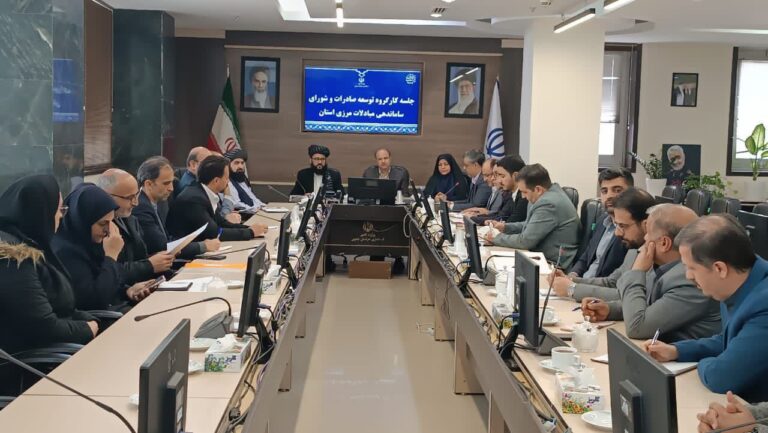
Tehran – IRAF – Citing a statement released on Monday, February 9, by the Taliban governor’s media office in Herat, the issue was discussed during a meeting between a delegation from the Taliban’s Ministry of Public Works and Noor Ahmad Islamjar, the group’s governor in Herat. The delegation presented a comprehensive report on the process of identifying affected landowners and the progress of compensation payments.
Identification of Affected Individuals and Budget Allocation
According to the report presented, along the second phase of Section Four of the Herat–Khaf railway, which passes through the districts of Zendajan, Injil, and Guzareh, a total of 152 individuals have been identified as affected.
Of these, 140 cases involve private landowners, while 12 cases pertain to government-owned lands.
To compensate for damages and pay land ownership rights, a total of 187 million afghanis has been allocated.
Details of Compensation Payments
In the category of private lands and buildings, an amount of 68,753,895 afghanis was allocated to 140 landowners, of which 64,188,433 afghanis has so far been paid to 134 individuals.
The remaining six individuals were not present during the payment process and are scheduled to receive their compensation in subsequent stages.
Taliban officials have emphasized that the completion of this process will pave the way for the uninterrupted continuation of work on the second phase of this major project.
Strategic Importance of the Project
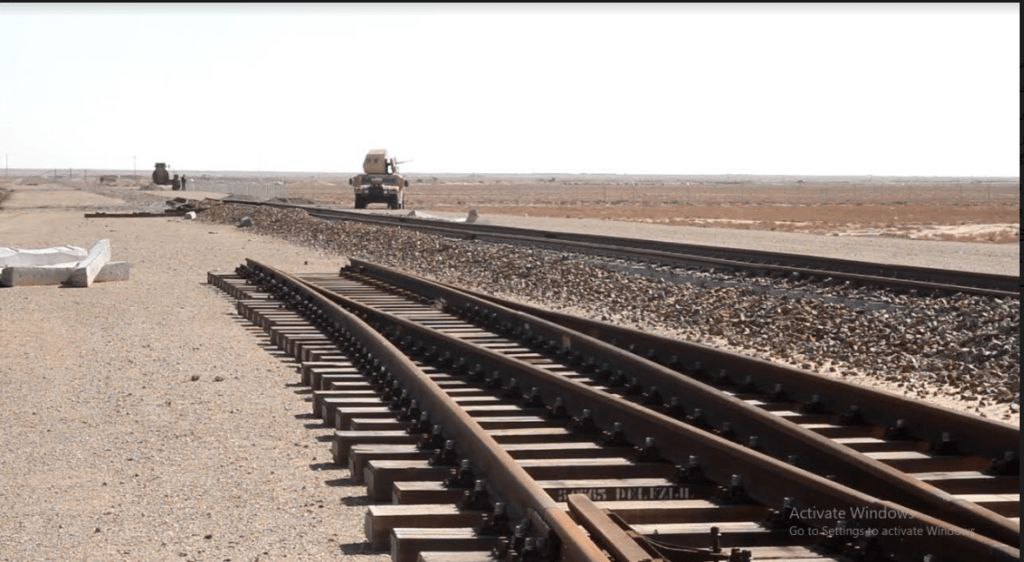
The Khaf–Herat railway is one of the most important joint projects between Iran and Afghanistan, designed to connect eastern Iran to western Afghanistan by rail. The project is expected to play a significant role in expanding trade, facilitating transit, and improving Afghanistan’s access to Iran’s railway network and southern ports.
This route forms part of a larger east–west transit corridor and is considered a key link in alternative Silk Road routes.
Project Structure and Current Status
The railway has been designed in four sections: the first two sections are located in Iran, while the final two sections lie within Afghanistan.
The Iranian sections have been completed, and part of the Afghan segment was inaugurated on a trial basis in 2020. However, completion of Section Four, particularly its second phase, is essential for the full operationalization of the route.
Second Phase of Section Four
The second phase of Section Four spans approximately 47 kilometers, and its implementation has been assigned to the GAMA Company.
The value of this section of the project is estimated at more than USD 54 million, and Taliban officials have stated that work is now progressing at a faster pace.
This phase had been suspended several times in previous years due to security, financial, and administrative challenges. However, with the completion of the compensation payment process, it is expected that construction operations will now continue without obstacles.