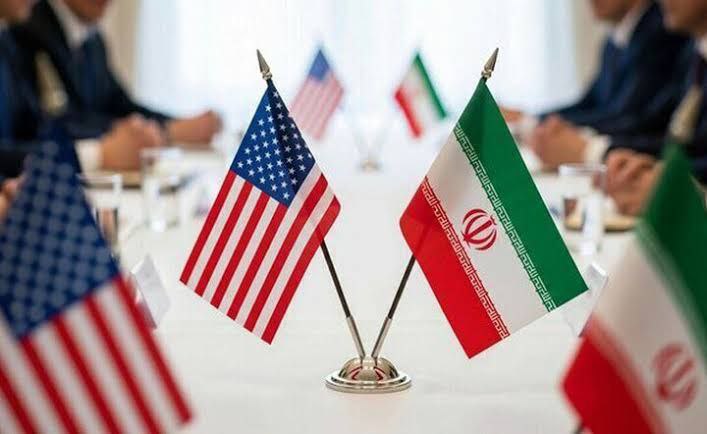
Tehran- IRAF- The indirect talks between Iranian and U.S. diplomatic delegations in Muscat, along with expressions of hope by both sides for continuing the process, have sparked a wave of reactions among Afghan users—reactions that reflect a mix of cautious optimism, skepticism, and concern.
Cautious Welcome and Concerns
Some Afghan users consider these negotiations a positive step toward improving Iran–U.S. relations and an effective factor in strengthening regional stability.
Given that relations between Tehran and Washington have long been one of the traditional challenges in regional equations, the successful launch of talks between the two rival countries has generated a degree of hope within Afghan public opinion.
In an analysis, the newspaper Hasht-e Sobh referred to the intensification of the crisis in recent weeks and wrote:
“Finally, diplomacy prevailed over war, and the United States and Iran began their negotiations.”
The newspaper described the start of the talks as a positive step and added:
“Although the Oman talks have not yet produced tangible results, there are signs that both sides prefer diplomacy over war.”
However, not all analyses are optimistic. Some experts view the future of these talks with skepticism and remain cautious about their outcomes.
Ahmad Sa’eedi, a political analyst, wrote: “These negotiations are more about testing intentions and red lines on both sides than reaching an immediate agreement.”
He emphasized: “The return of the delegations without declaring failure is itself a sign that the doors are not completely closed and that there are still windows of hope.”
Referring to the high level of distrust between the two sides, Saeedi added:
“Both parties are seeking to manage tensions and prevent an escalation of the crisis. If the talks continue, they will likely proceed gradually and step by step, rather than resulting in a major and sudden agreement.”
Negotiations Under the Shadow of War
Meanwhile, some Afghan users pointed to the presence of General Brett Cooper, the commander of U.S. Central Command (CENTCOM), within the American negotiating delegation, describing it as contrary to diplomatic norms and an indication of Washington’s security-oriented approach to the talks.
Facebook user Nemat Rahimi wrote: “The presence of a high-ranking military general at the Muscat negotiations shows that these talks are not purely political and also have military and economic dimensions.”
He added: “This presence sends a message of military power and warns the other side that if the negotiations fail, the military option remains on the table.”
By contrast, some users highlighted the move by Seyed Abbas Araghchi, Iran’s foreign minister, in refusing to receive the CENTCOM commander and leaving him waiting behind the negotiation hall doors for 20 minutes, interpreting it as carrying a specific political message.
On the other hand, Ghorban Fayaz, an Afghan political activist, referring to the 12-day war imposed by Israel and the United States against Iran and claims about the destruction of Iran’s nuclear capabilities, wrote on his Facebook page:
“If Iran’s nuclear capability has been destroyed, then why are they negotiating again over the nuclear program? Didn’t Trump say he had destroyed Iran’s nuclear capability?”
Emphasizing the inability of the United States and Israel to attack Iran, he stated:
“If they had the ability to attack, they would not hesitate even for a second. The 12-day war showed that in the event of an attack, Israel and U.S. bases in the region would be flattened. So why is Israel silent this time, with only Trump issuing threats? Because they have seen Iran’s missile capability.”
Hope and Anxiety
The conclusion of the initial meeting in Muscat and the announcement of a subsequent round of talks have created a wave of hope regarding the continuation of negotiations. At the same time, however, the history of distrust toward the United States, its failure to adhere to international agreements, and Donald Trump’s contradictory behavior have raised concerns among Afghan users.
Many users believe that Trump has demonstrated an unreliable character in foreign policy, a perception that has caused optimism about the negotiations to be accompanied by doubt.
In this context, Facebook user Hossein Mirzaei wrote:
“Trump has shown that in international politics he thinks of nothing but U.S. interests and adheres to no principles. Negotiating with such a person is extremely complex and sensitive.”
Meanwhile, Afghan political activist Habib Ahmadi, referring to Iran’s important geographic position, wrote:
“Iran’s capability to close the Strait of Hormuz should not be underestimated.”
Referring to an Axios report about direct talks between Iran’s foreign minister and the U.S. special envoy, he added:
“I sincerely hope the Muscat negotiations reach a result. War benefits no country, and its flames can engulf the entire world.”
Although Trump described the initial round of talks as “very good,” and Iran’s foreign minister has also expressed hope for continuing the dialogue, the erratic behavior and dual personality of the U.S. president have meant that these hopes remain accompanied by concern.
Overall, the diverse reactions of Afghan users on social media show that Iran–U.S. negotiations are among the foreign policy issues being followed with particular sensitivity and attention by Afghan public opinion.