Tehran-IRAF- Asif Durrani, Pakistan’s former special representative for Afghanistan affairs, recently stated that the irresponsible actions of the Taliban have placed Afghanistan on a path towards a deeper collapse.
In a message on the social network X, he wrote that with the cessation of US aid and the destruction of vital lifelines, millions of Afghans are now facing hunger, increasing poverty, and the collapse of essential services.
Durrani emphasized that the current situation is not merely instability, but “a full-blown catastrophe” that has been exacerbated by Taliban policies.
New York Times Report on the Deepest Crisis in 25 Years
Meanwhile, The New York Times reported that Afghanistan, following the widespread cessation of international aid, is facing the most severe humanitarian crisis in a quarter of a century.
The report states that the sudden and “brutal” reduction in aid has left millions of Afghan children with severe hunger and facing the risk of death.
The United States had provided approximately $3.8 billion in humanitarian aid to Afghanistan over the past four years, but with Donald Trump’s return to the White House, this aid has been completely halted.
Closure of Health Centers and Increased Mortality
According to this report, following the halt in aid, nearly 450 health centers across Afghanistan have been closed.
The closure of these centers has led to increased mortality among women and children, and nurses say there has been a significant increase in the number of women who have suffered severe hemorrhaging during long journeys to reach clinics or have even given birth inside taxis.
Simultaneously, health needs have also increased, especially after the forced return of over 2.8 million migrants from Iran and Pakistan.
Taliban’s Admission of Inability to Manage the Crisis
While the Taliban typically refrain from commenting on the humanitarian crisis, an official of the group in Kandahar admitted to The New York Times that the Taliban administration is unable to fill the void left by aid organizations.
He said: “Providing food, clothing, and other aid that non-governmental organizations used to provide is beyond our capability. The situation is going to become very difficult.”
Worrisome Increase in Hunger and Malnutrition
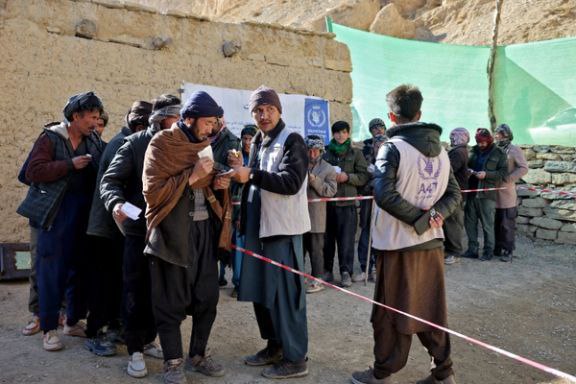
The New York Times reports that more than 17 million Afghans—equivalent to 40% of Afghanistan’s population—are now facing acute hunger; a number that has increased by two million people compared to last year.
Malnutrition, which was previously more common in rural areas, has now spread to cities as well, with children, the elderly, and the sick being the most affected.
Long-term Consequences and Experts’ Warnings
Researchers warn that the reduction in aid will have long-term and irreparable effects on the future generation of Afghanistan.
Mohammad Mustafa Rahil, a researcher at Lund University, says that the consequences of malnutrition and the collapse of health services “will remain for the next 20 to 30 years” and will not be easily compensated even with the return of aid.