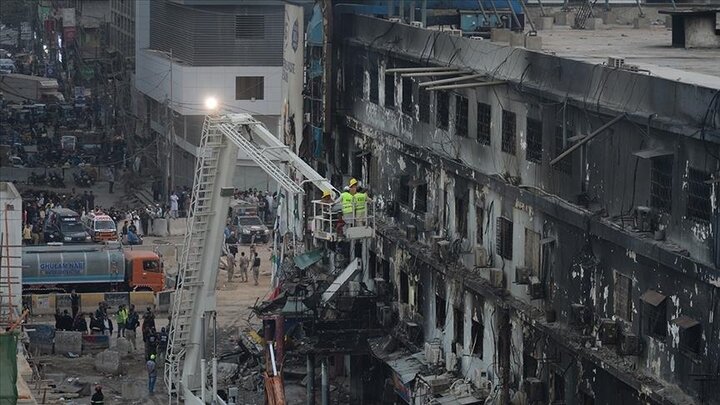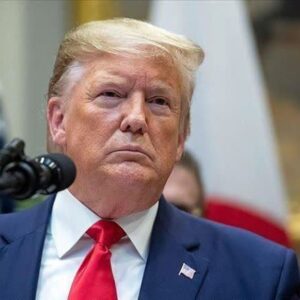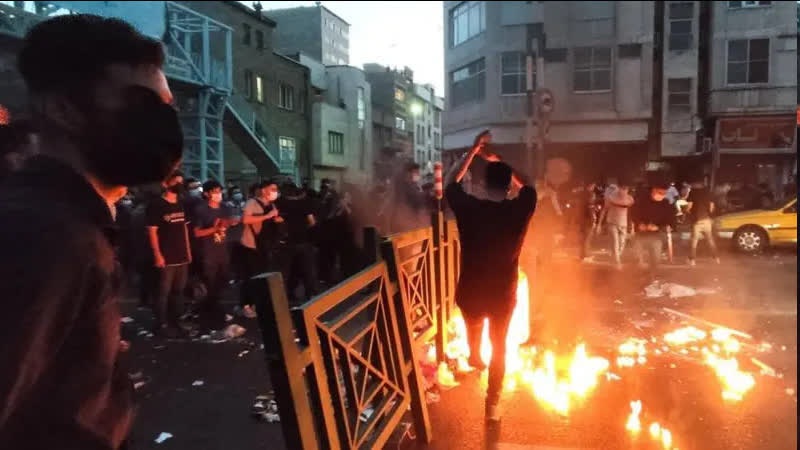
Tehran- IRAF- President Donald Trump, in obvious disregard of international law and the principle of state sovereignty, openly expressed support for rioters and mercenary terrorists involved in unrest across Iran. He encouraged them to continue armed riots and destroy urban infrastructure and public property.
Together with Israel and exiled opposition groups, Trump seems convinced that military intervention could topple the Islamic Republic of Iran. The question remains: Can Washington, through interference, bring about in Iran the same kind of stability and unity that the Islamic Republic itself has built among a nation of diverse ethnic and cultural groups?
To answer this question, we must examine America’s past interventions in Afghanistan, Iraq, Syria, and Venezuela.
Former Irish army officer and UN peacekeeping veteran Philip Quinlan notes:
“The idea that we can enter a country, spend six or twelve months there, and change the very evolution of a culture has always struck me as a breathtaking and naive mixture of arrogance.”
Similarly, the Soviet Union sought to build a communist society in Afghanistan, while NATO tried to institutionalize liberal democracy. Both models failed — each ignored or belittled the tribal realities and social structures of Afghan society.
The immoral nature of realist politics also makes it difficult to justify “realistic” analyses or strategies on any grounds other than narrow national interests. In that sense, non‑Western actors are equally entitled to promote their self‑interest.
Realists such as Hans Morgenthau maintain that universal moral principles do not apply in international relations, but they still attempt to defend hegemonic Western dominance as the provider of “global public goods” — a self‑serving justification.
From what ethical viewpoint could America’s or Europe’s interests be inherently more legitimate than those of China, Russia, or Afghanistan’s Pashtun tribes?
Parag Khanna points out that; the emerging geo‑economic order has shifted global perspectives from Euro‑American to Afro‑Eurasian. Western liberal democracy no longer inspires most of the world — unless it offers tangible benefits to the larger populations of emerging economies. A model with a few “haves” and countless “have‑nots” is no longer worthy of emulation; today, leadership derives from financing infrastructure and providing technical assistance.
American strategists still assume that the global system naturally prefers U.S. leadership.
Conservatives argue that restraint will preserve America’s dominance; liberals claim that Western institutions make the U.S. essential to global order.
Neither is valid: both take American actions as universal norms while disregarding alternative dynamics elsewhere.
With China’s Belt and Road Initiative, Eurasian states — European and Asian alike — are converging across the continent, opening the gates to inevitable flows of investment and trade that will build a flourishing economic system across Eurasia.
Military occupations and economic sanctions against core Eurasian players like Russia and Iran obstruct this process and alienate potential stakeholders.
From a Eurasian standpoint, economic integration is a far more effective engine of long‑term political transformation than the short‑term tactics of military intervention or sanctions.
It is said that Eisenhower administration advised America to avoid land wars in Asia, warning that such wars require prolonged not apply in international relations, but they still attempt to defend hegemonic Western dominance as the provider of “global public goods” — a self‑serving justification.
Strategists behind the invasions of Afghanistan and the Iraq War say that after the defeat in Vietnam, they studied “The Art of War,” believing it would give them the key to victory in Central Asia. It seems they did not realize that non-state adversaries had changed the nature of war so profoundly that understanding the meaning of “victory” was no longer straightforward. They should have read the theory of the world-historical cycle developed by Ibn Khaldun (1332–1406)—a global linear view of history as progress toward an ever-improving future, one that fuels a deadly ambition for limitless growth in a world of finite resources. A deeper understanding of tribal cultures and Ibn Khaldun’s analyses could have prevented many Euro-American mistakes in Afghanistan.
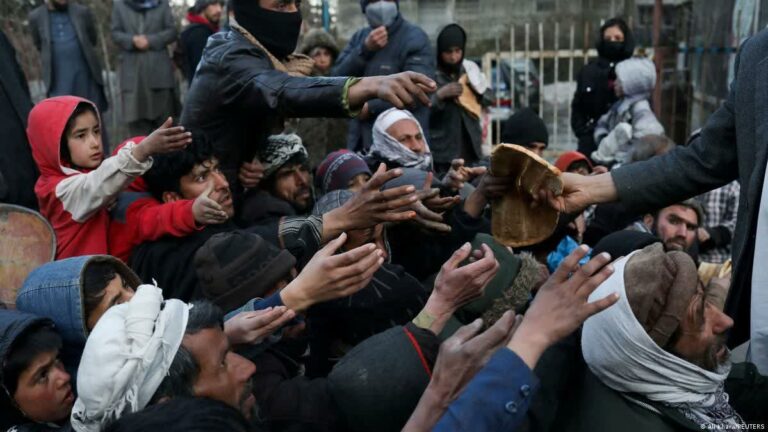
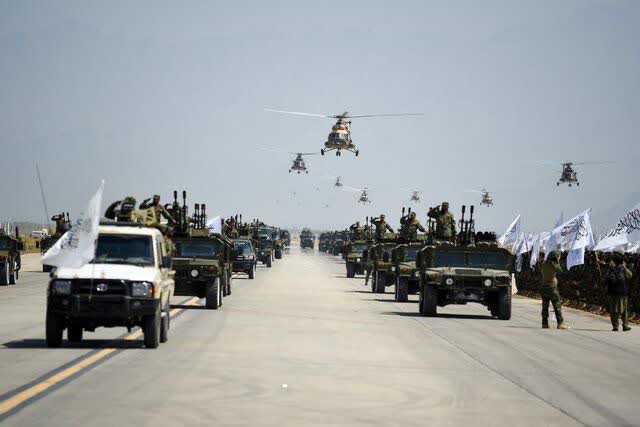
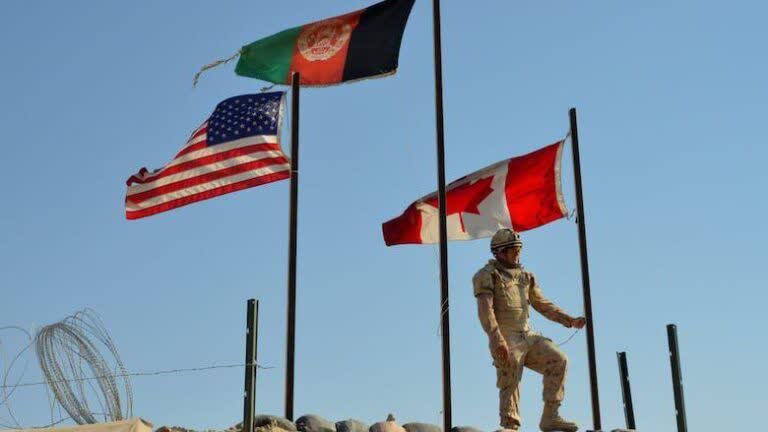
In October 2001, the United States invaded Afghanistan under the pretext of defeating al-Qaeda and the Taliban. The invasion of Afghanistan is the United States’ greatest military failure in the past century. In Afghanistan, the American occupying forces faced two obstacles: on the one hand, a powerful force that the White House considered an enemy but could not subdue; on the other, the fragile opponents of the Taliban whom the Americans relied on to form a postwar government. This situation undermined the possibility of establishing a self-reliant government in the aftermath of the Taliban’s fall. Seeing the weakness of the ruling coalition that replaced them, the Taliban concluded that if they kept fighting, they would eventually be able to restore the “Islamic Emirate of Afghanistan.” After 20 years, on August 30, 2021, the United States completed its tumultuous withdrawal from Afghanistan, and the Taliban once again took full control of the country. The reality is that the U.S. not only failed to contain terrorism in Afghanistan; it fueled instability there, displaced millions, ended the lives of hundreds of thousands, including American soldiers, and exited the country in defeat.
In March 2003, the United States invaded Iraq and toppled Saddam’s regime under the pretext of weapons of mass destruction—especially nuclear arms. The U.S. withdrew in 2011, paving the way for the rise of ISIS and the redeployment of American forces. Back in 2002, Barack Obama, then a state senator from Illinois, warned that a U.S. attack on Iraq would be “a dumb war… a rash war.” The Costs of War Project at Brown University details the deadly toll of these conflicts. The issue under review is the thousands killed in these two countries as a result of the “United States’ post-9/11 wars.”
Findings of the war project:
- Civilian deaths in Afghanistan, Pakistan, Iraq, Syria/ISIS, Yemen, and other theaters: 363,939 to 387,072.
- U.S. military deaths in these countries and other theaters: 7,052.
- U.S. Department of Defense civilian employee deaths in these theaters: 21.
- U.S. contractor deaths in these theaters: 8,189.
- National police and army deaths in these theaters: 204,645 to 207,845.
- Other allied force deaths in these theaters: 14,874.
- Opposition militia deaths in these theaters: 296,858 to 301,933.
- Journalist and media worker deaths in these theaters: 680.
- Humanitarian and NGO worker deaths in these theaters: 892.
- Total deaths in these theaters: 897,150 to 928,588.
When Obama’s brief and to-the-point guidance was made public in 2014, there was a growing consensus in Washington that the invasion of Iraq had been the United States’ greatest foreign policy mistake since the Vietnam War. His meaning was clear: the war launched by his predecessor had been disastrous for Iraq, the Middle East, and the United States. Even if Obama’s advice was perfectly sound in the abstract, his own administration found it difficult to follow in practice. In fact, any fair reflection on the historical record must conclude that the Obama administration repeated some of its predecessor’s foreign-policy mistakes, albeit on a smaller scale and under different circumstances. The ill-fated adventures of the Obama administration in Libya and Syria are plain to see.
Confronted with mass movements that drove uprisings in both places, the governments of these two countries faltered. Washington used language and pursued policies consistent with the role the United States and its allies wanted it to play in the global order. These policies also included significant errors that, in fact, sowed the seeds of failure. The United States and its partners helped Libyan rebels overthrow the Gaddafi regime, setting the country on a path to a civil war that remains unresolved.
Then came Syria. As the uprising there continued, it seemed the Syrian leader would be forced to yield. Obama initially hesitated to comment due to divisions within his administration over how to respond, but in August 2011 he took a position and declared that Assad must step aside. Assad did not, and Obama’s statement combined an analytical failure with a political misstep. Amid the growing horrors of the civil war, the United States felt compelled to act on its repeated insistence that the Assad government had lost its legitimacy. Avoiding direct military intervention, Washington chose to support a collection of rebel groups that called themselves “moderate.” At the time, Syrian rebels of various stripes were receiving arms through informal and uncoordinated channels, such as Islamist networks and arms smugglers. The civil war therefore intensified, and even with Assad gone, stability has not returned to a war-weary country.
Even today, although some of the staunchest backers of the Iraq invasion have recanted and calls to end the post-9/11 “forever wars” are commonplace, it is hard to say whether the U.S. foreign-policy establishment has truly learned the lesson that it should not intervene in other countries’ domestic affairs under the pretext of creating stability. The old path of interventionism is blocked by exhaustion among both politicians and the public, as well as fresh memories of past failures. While appetite for full-scale humanitarian intervention appears low, the idea of regime change as a U.S. objective has periodically animated post-Obama political debates about various countries, including Iran, Venezuela, North Korea, and Russia.
A few days after New Year’s, the United States launched a limited military operation against Venezuela and, on January 3, 2026, abducted its president, Nicolás Maduro. The reality is that Trump’s oversight of this South American country will only lead to further setbacks. For someone who once professed a desire to “end all wars and bring a new spirit of unity” to the world, it is clear that Trump’s intentions have revealed not a shred of truth. Instead of attempting to occupy Venezuela without congressional consent, the United States should prioritize improving the lives of people in that country who are struggling to make ends meet. Following Maduro’s arrest, food prices in Venezuela have risen sharply. After spending $31 million per day on military operations in Venezuela, millions more must be devoted to reducing educational, nutritional, and health inequalities. The nighttime seizure of Maduro, accompanied by massive explosions that killed more than 100 people in Venezuela, has left neighboring countries fearful about who might be targeted next. The largest Caribbean island, Cuba, lost 32 citizens as a result of this harrowing operation.
The U.S. attack on Venezuela appears to be only the beginning of Trump’s troubling foreign-policy agenda. He has threatened to seize Greenland, Canada, Cuba, and Mexico. Trump’s ultimate goal is for the United States to become the dominant power across the entire Western Hemisphere—an imperial ambition that puts several governments and their citizens at grave risk. While the region faces deep political instability and humanitarian crises, U.S. intervention is unlikely to make the future any better.
The United States must learn from the past and from historical experiences of unlawful interference in other countries’ internal affairs—interventions that have consistently ended in failure. It should pull back from meddling in Iran’s domestic affairs and cease supporting rioters, CIA- and Mossad-backed terrorists, and an ineffective opposition.
As Denis Citrinowicz, former head of the Iran desk in Israeli Military Intelligence and an expert on security and Middle Eastern affairs, has emphasized: although domestic developments in Iran may ultimately lead to structural change, this process will be neither accelerated by U.S. military intervention nor by reliance on an opposition that lacks real influence inside the country. The main danger is the region becoming trapped in a large-scale military conflict with uncontrollable consequences—especially when there are no active domestic protests and Washington lacks a clear vision of “the day after.”