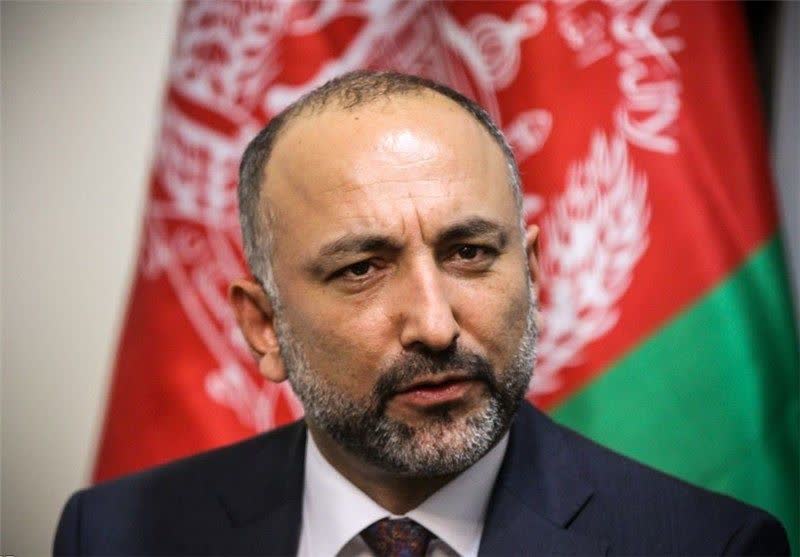
Tehran- IRAF- Mohammad Hanif Atmar, former Foreign Minister in Afghanistan’s previous government, said today (Monday, January 22) in a post on his social media page, referring to the long historical struggles of the Afghan people: “After long historical struggles, the people of Afghanistan rose from destruction, war and injustice in 2003 and, with broad popular participation, adopted a constitution that, in both content and procedure, is counted among the most advanced constitutions in the country’s history.”
He added: “This law defines the rights, freedoms and duties of all citizens on the basis of full equality before the law, and explicitly forbids any discrimination or claims of superiority in any form or nature.”
He emphasized that the people of the country consider any form of ethnic or cultural supremacism, ethnic hatred and national divisiveness — under any name and for any purpose — to be rejected, alien and hateful.
Atmar added: “With wisdom and courage, the nation of Afghanistan has rejected any form of linguistic and cultural supremacism, and has embraced coexistence and mutual acceptance on the foundation of justice and mutual respect as fundamental principles of citizenship and nation‑building.”
Recognition of equality among ethnic groups and languages
Atmar noted that; the constitution recognizes the country’s various ethnic groups and has affirmed the languages of the Afghan people as state official languages and as additional official languages of the country. “The constitution defines national identity on the basis of the totality of a culture and civilization that the people of this land have created, preserved and developed over thousands of years of coexistence, interaction, shared history and common destiny,” he said.
Call to Safeguard National Unity
Atmar concluded by referring to freedom of expression and the media, stating:
“With due respect for freedom of expression and the media, it is expected that legitimate debates be presented in a manner that respects the historical consensus and will of the people of Afghanistan, and that national unity be safeguarded in our people’s shared struggle to establish a legitimate system, citizens’ rights, and lasting peace.”
Penal Code of the Taliban Courts
In recent days, the publication of a document known as the Penal Code of the Taliban Courts by the human rights organization as “Rawadari” has sparked widespread reactions from individuals, institutions, and international organizations.
In its statement, Rawadari said; it has recently obtained a copy of the Penal Code of the Taliban Courts, which shows that the document, after being signed by Mullah Habatullah, the Taliban leader, was sent to Afghanistan’s provinces for implementation within judicial institutions. The code is drafted in three parts, ten chapters, and 119 articles.
The Afghan human rights organization; “Rawadari” has expressed concern, in a statement, over the consequences of implementing the “Penal Code of the Taliban Courts”.
Meanwhile, Pakistan’s Council of Islamic Scholars has also condemned the Taliban’s penal code in a separate statement.