Part Two – The rightful protests of Tehran’s Bazaar merchants over economic and livelihood hardships began completely calm, peaceful, and civilized. The protests began calmly and peacefully, recognized from the very outset by the highest executive officials of the country, who provided legitimate and clear channels for expressing and following up on the demands—channels that had acceptable outcomes and could have led to the expected results.
But why did these “protests” turn into “riots”? And how did street unrest so quickly shift into gruesome acts of terrorism of the American–Israeli type—atrocities previously seen in Afghanistan, Iraq, Syria, and Gaza?
The Record of American–Zionist Terrorism Based on Statistics
Two days of destruction and terror on the streets of Iran exposed the true face of American–Israeli terrorism. The apocalyptic images from Mashhad and Tehran to Rasht, Ilam, and dozens of other cities clearly show that the people’s and merchants’ protests over economic and livelihood concerns were not only exploited to target the livelihood of citizens, but—following expressions of support and encouragement from Trump, Netanyahu, and Pahlavi—were transformed into a terrorist project aimed at overthrowing Iran’s political system.
The horrifying and shocking statistics released regarding the scale of killings, terror attacks, and destruction reveal a new reality—one unprecedented in any previous unrest or destabilization attempt.
According to the latest figures published by the Foundation of Martyrs and Veterans Affairs, 3,117 people lost their lives as a result of attacks by armed terrorists affiliated with the CIA and Mossad. Of these, 2,427 were civilians and security personnel who were martyred.
Among the victims, a significant number of women and children were killed directly by armed terrorists. Some atrocities were so horrific that they could never be broadcast—ranging from burning people alive to beheadings.
What do these actions remind you of?
Abu Ghraib, Bagram, and Guantanamo prisons?
Or the crimes of CIA‑ and Mossad‑trained terrorists in Afghanistan, Iraq, and Syria?
Or the genocidal actions of the Zionist regime in Gaza?
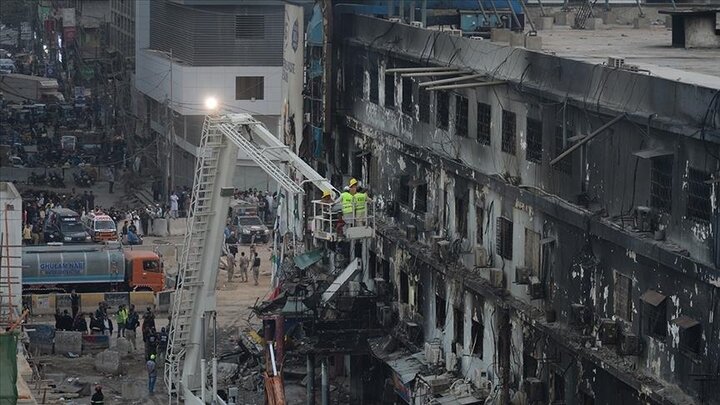
Below is an overview of the overall damage inflicted by American and Israeli agents in their attempts to burn and destroy public and private property in Iran:
- 305 ambulances and buses
- 24 gas stations
- 700 shops and stores belonging to ordinary citizens
- 300 private homes
- 750 banks
- 414 government facilities
- 749 police vehicles
- 120 Basij bases
- 200 schools
- 350 mosques and thousands of Qurans
- dozens of libraries
- 89 seminaries
- 253 bus stations
- 600 ATMs
- 800 private civilian vehicles
The financial damage inflicted on public and private property—much of it purchased through citizens’ taxes—amounts to several trillion tomans. In Tehran alone, over 3 trillion tomans of damage was inflicted on public property.
This is what the American‑ and Israeli‑aligned media describe as a “protest.” Can the people of Iran, who genuinely object to economic hardships caused by America and its partners’ unjust sanctions, be the ones to inflict such massive harm on the economic foundations of their own country?
The People Step in the Scene
The American and Israeli terrorism project was defeated by the vigilance and insight of the Iranian people during the 22 Dey (January 12) mobilization, and through the bravery and alertness of Iran’s dedicated military and intelligence forces. The people once again demonstrated that despite their complaints over livelihood issues caused by foreign sanctions and threats, they remain loyal to the principles of Islam, Iran, and the Islamic Revolution, and will not allow America’s terrorist scenarios—executed in Afghanistan, Iraq, Libya, Sudan, Syria, Gaza, and Venezuela—to be carried out in Iran.
Accordingly, the executive and security institutions of the country, recognizing the complexity of the enemy’s plot and accurately identifying its infiltration routes into Iranian society, decided to shut down the propaganda arms, educational networks, communication channels, and covert links connecting domestic rioters to their anti‑Iranian leaders in Tel Aviv and Washington—by disconnecting the internet. This was a matter of national security, the highest priority for any responsible and independent state.
Thus, despite the undeniable costs and consequences of the internet shutdown for online businesses, media, and public access to social networks, it was a justified and unavoidable decision directly linked to the security of Iran and Iranians. This measure played a decisive and central role in neutralizing the sedition, unrest, and rioting, and in foiling the colonial plans of Trump and his terrorist associates in occupied Palestine to overthrow Iran’s government and transform Iran into another Afghanistan, Iraq, Ukraine, or Venezuela.
And finally, once again, Iran showed how it can emerge safely from major conspiracies and turn the enemy’s dream of occupying the “land of the brave” into a bitter and eternal disappointment—something that has been the secret of the Islamic Republic’s endurance, strength, and resilience over the past 47 years.