According to IRAF News Agency, in recent years the expansion of regional cooperation in rail transport infrastructure has become a key pillar of economic connectivity policies across Asia. Within this framework, growing engagement among Iran, Afghanistan and China—aimed at creating alternative and secure transit routes—has gained particular significance.
In this context, a meeting was held between Jabbar Ali Zakeri, Iran’s deputy minister of roads and urban development and chief executive of the Islamic Republic of Iran Railways, and Mawlawi Abdul Karim Fateh, technical deputy and acting head of Afghanistan’s Ministry of Public Works, along with Mullah Baradar, the Afghan government’s deputy prime minister for economic affairs. During the meeting, the two sides discussed about ways to expand economic, trade, transit and social ties between the two countries.
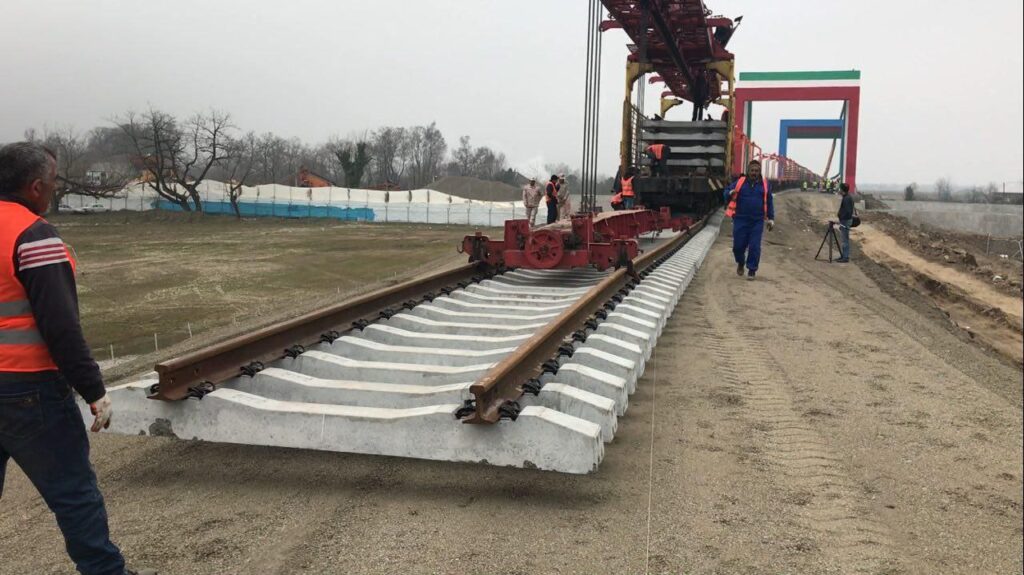
One of the main topics of the talks was rail connectivity between Iran and China via Afghanistan, and the importance of investment in the Herat–Mazar-e-Sharif railway project.
The Herat–Mazar-e-Sharif–Wakhan railway project, designed as a strategic plan to link China by rail to Europe and West Asia through Afghanistan, Iran and Turkey, could play a significant role in boosting regional and transregional trade and transit. Officials from both sides stressed the need to strengthen economic, commercial and transport relations and agreed to hold bilateral meetings involving managers, contractors and consultants from both countries in the near future to draw up and finalize a roadmap for implementing the railway project and launching construction.
Accordingly, the meeting can be seen as a sign of the two countries’ serious intent to complete a strategic rail corridor—one that could transform Afghanistan from a landlocked country into an active link in the East–West trade chain.
General features of the Iran–Afghanistan–China railway project
The proposed route of the rail corridor begins in Khaf in eastern Iran and, after passing through Herat and Balkh, connects to the rail networks of Uzbekistan and China. The route forms part of the broader Eurasian rail network and enables direct rail connectivity between China and the Persian Gulf and the Sea of Oman via Iran.
Economic significance of the corridor for Afghanistan
Due to its geographical position at the heart of Asia, Afghanistan has substantial latent potential to play a transit role. The development of the Herat–Balkh rail corridor is regarded as a turning point in redefining Afghanistan’s economic standing.
The route links Afghanistan to the trade networks of Central Asia and China on one side, and Iran and West Asia on the other, shifting the country from a peripheral position to that of an active transit player. Key economic benefits include lower transport costs compared with road freight, improved export competitiveness, and the creation of sustainable revenue through transit fees.
In addition, implementation of the project is expected to generate employment, attract investment, and strengthen economic ties between western and northern regions of Afghanistan, paving the way for more balanced development and greater economic stability.
Importance of the corridor for Herat and Balkh provinces
At the national level, the provinces of Herat and Balkh are set to become the main beneficiaries of the corridor. Herat, as Afghanistan’s western gateway and point of connection to Iran, would revive its historical role in regional trade and emerge as a logistics and commercial hub for western Afghanistan. Balkh, as the country’s northern gateway, would strengthen Afghanistan’s links with Central Asia. Rail connectivity between the two provinces would not only generate economic gains but also improve social welfare, increase employment and bolster stability across Afghanistan.
Iran’s role in shaping the corridor
Seeking to reinforce its position along regional transit routes, Iran has placed the expansion of rail cooperation with Afghanistan high on its agenda.
During a recent visit to Afghanistan, Jabbar Ali Zakeri stressed in meetings with Taliban officials the need to expand Afghanistan’s rail network. Talks focused on developing the Khaf–Herat railway as Iran’s rail gateway to Afghanistan and linking it to the Herat–Balkh corridor—a route that could connect Iran’s rail network to Central Asia and China.
The Iranian official emphasized taking concrete steps to implement the project. Such connectivity would allow goods from China and Central Asian countries to be transported to Iran’s southern ports, including Bandar Abbas and Chabahar, strengthening Iran’s role as one of the region’s main transit routes.
China’s role in shaping the corridor
For China, the rail corridor passing through Afghanistan and Iran is considered a complementary component of the Belt and Road Initiative. The route would reduce reliance on high-risk maritime lanes and provide faster access to the Persian Gulf, the Middle East and Europe.
Activating the corridor could significantly shorten transit times for goods between eastern China and Europe and enhance the security of China’s supply chains. Strategically, it would allow Beijing to diversify geopolitical risk and increase flexibility in its foreign trade.
Regional implications
The Herat–Balkh railway corridor represents an example of economic development prevailing over political competition. By creating shared interests among Iran, Afghanistan, China and Central Asian countries, the project increases economic interdependence and helps reduce political and security tensions. Within this framework, Afghanistan would reclaim its historical role, shifting from the margins of regional engagement to the center of Asia’s transit dynamics.
Ultimately, the Herat–Balkh rail corridor goes beyond a mere infrastructure project; it is a strategic tool for reshaping the economic and geopolitical roles of Iran, Afghanistan and China in Asian trade. By lowering transport costs, promoting economic development and strengthening regional stability, it could become one of the region’s key trade routes. The project’s success, however, depends on sustained political cooperation, stable financing and guaranteed security along the route.