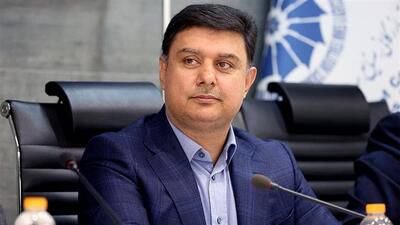
According to IRAF, he emphasized that Afghanistan’s extensive need for infrastructure reconstruction, along with cultural and geographical proximity and the competitive capacity of Iranian companies, has turned the country into a strategic market for Iran.
Referring to memorandums of understanding signed between economic actors from the two countries, Naghavi said: “These memorandums are merely the starting point for cooperation. To turn them into actual contracts, risks must be carefully assessed, financial and guarantee mechanisms clearly defined, and the necessary coordination established at the level of economic diplomacy.”
He also stressed the importance of Iranian companies adhering to international tender standards and utilizing FIDIC contractual frameworks, noting that this could enhance project transparency and minimize contractual disputes.
The Role of Research in Private-Sector Decision-Making
Continuing the meeting, Dr. Issa Mansouri, head of the Research Center of the Iran Chamber of Commerce, announced the center’s readiness for closer cooperation with the Technical and Engineering Commission.
He described the interaction among the commission, specialized associations, and the Research Center as a successful example of the systematic use of the private sector’s expert capacity, and emphasized the need to sustain and expand such cooperation in development-related fields.
Engineering Associations and the Need for Standardized Contracts
Dr. Alireza Moghdaszadeh Ardebili, Chairman of the Coordinating Council of National Engineering Associations, also emphasized the importance of institutional coordination in developing overseas activities during the meeting.
He stated that engineering associations due to their direct involvement in implementation and their precise understanding of the technical and legal challenges of projects — play a key role in drafting standardized contracts and reducing execution risks, particularly in markets such as Afghanistan.
In this regard, Engineer Mohammad Halvaei, Vice-Chairman of the Commission, stressed the necessity of professionalizing the process of signing foreign contracts and updating the annexes of the Standard Contract 5490.
Report on the Visit of Iran Chamber Delegation to Kabul
In another part of the meeting, a report was presented on the visit of a delegation from the Iran Chamber of Commerce to Kabul.
Sa’eed Noushad Soheili, the commission’s dispatched representative, said that Iran had the largest presence at the Fourth National and International Imam Abu Hanifa Exhibition, with around 40 booths and nearly 100 economic operators.
According to him, memorandums of understanding worth $262 million were signed between economic.
Energy; The Main Focus of Future Cooperation
The report also referred to the Iranian delegation’s meeting which was made with executives of Afghanistan’s national power utility (Breshna).
According to Breshna officials, 75 percent of Afghanistan’s electricity is imported, and the country is facing a shortfall of 6,000 megawatts.
During the meeting, Iran’s capabilities in the electricity sector were presented, including energy exports, the construction of solar and wind power plants, the development of transmission lines, and workforce training.
Afghan officials, citing the Taliban administration’s financial constraints, proposed two models of cooperation:
– Implementation of projects under BOT arrangements (Build, Transfer, Operate)
– Barter of technical and engineering services in exchange for the utilization of mines and other economic asset.
In separate meetings with Afghanistan’s Ministry of Energy and Water and the country’s Chamber of Commerce, Afghan officials underscored the cultural and linguistic commonalities between the two nations and called for the transfer of technical and the implementation of joint projects with the participation of Iranian companies.
Hassan Kazemi, the member of the board of ESTESNA, also referred to the capabilities of Afghanistan’s private sector, saying that despite difficult economic and security conditions, the sector possesses valuable experience and capacities that could serve as a foundation for joint cooperation.
The report also highlighted the revival of the Chabahar–Zahedan–Milak–Kandahar transit corridor as one of the key routes for expanding economic cooperation.
Conclusions and Future Plans
At the conclusion of the meeting, Ali Naqavi, emphasizing Afghanistan’s importance in Iran’s plans for exporting technical and engineering services, proposed holding a specialized session focused on Afghanistan.
He added that the meeting would provide an expert-level review of the signed memorandums of understanding, project risks, security conditions, and financial and guarantee mechanisms.
Naqvi stressed: “Turning memorandums of understanding into executable contracts requires step-by-step planning and institutional coordination, and the commission will pursue this matter with seriousness”.